
This page explains what the transplant process is, why it works, and what it means to be my (potential) kidney donor.
This is an introduction to the information, and if you choose to continue on into the evaluation process, you’ll have several opportunities to directly talk to and work with people far more knowledgeable than I on these topics. In the meantime, feel free to also reach out directly to me (Kaden) via email, kaden@kidney4kaden.org.
If you’d like to skip right to filling out the donation application:
The Kidneys
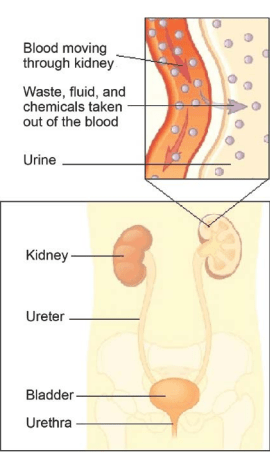
In short, everybody has two kidneys and they’re the primary filtration organ in the human body. They help your body maintain an equilibrium throughout the day, filtering out waste product and excess fluid via urine processing. They also help provide hormone signals to your body to produce red blood cells and balance calcium in your bones. Generally, most people have two kidneys, both roughly equal in size and strength.
As kidneys degrade, the amount of waste product builds up in the blood, and if it is not handled, will lead to death. In my case, dialysis is intended as a short-term treatment to filter out this waste product as a hold-over until I can receive a transplant, where I will get a new, third kidney to help keep me alive.
Dialysis is a very difficult process on my body, as it is an artificial form of kidney function, and requires long hours of taking blood out of me, filtering it, and putting it back in. I have severe food and activity restrictions, and have to spend 15-20 hours a week receiving treatment. This takes a large toll on both my life and my body.
Kidney Donation – A Life Saving Treatment
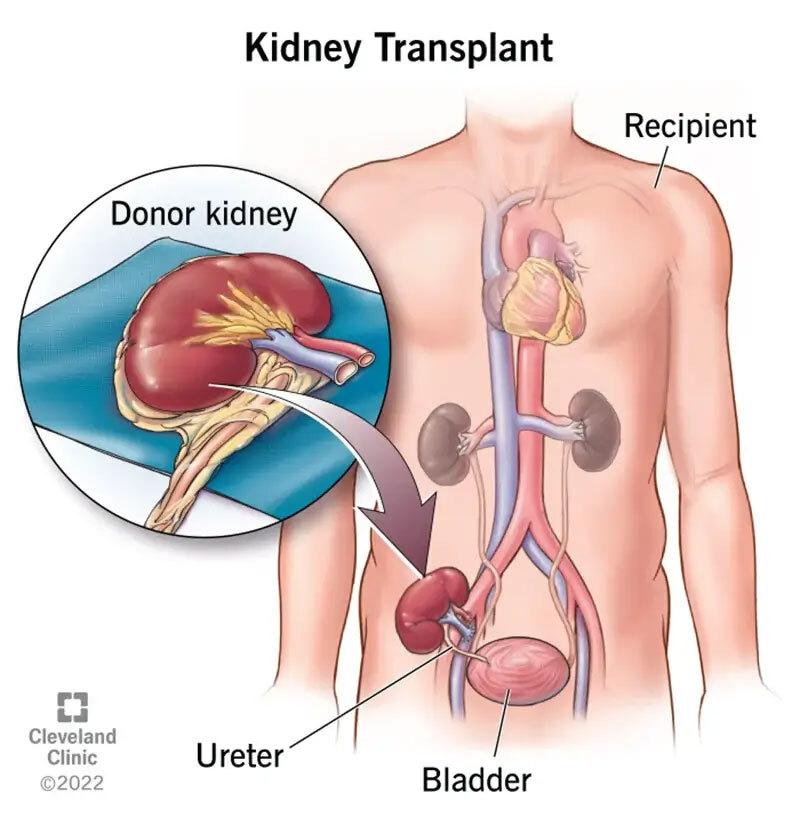
As insane as it sounds, modern medicine can take a kidney of one body and put it in another with very little issue. Because the new kidney is a foreign object to the recipient, immunosuppressant drugs are used to “hide” the new kidney from one’s body. This allows it to function, both filtering the blood and sending the proper hormone signals.
Living Donation vs. Deceased Donation
There are two types of donation, live donor kidney transplant and deceased donor kidney transplant:
- Living Donor: a healthy, qualified living donor undergoes surgery simultaneously with the recipient in parallel operating rooms, where a team of surgeons will remove the still-working kidney out of the donor and put it inside the recipient very quickly. Often, the new kidney starts instantly working, working to clean the blood of the recipient. On average, these kidneys last 15 to 20 years from time of transplant, up to 30+ years in some cases.
- An obvious and appropriate question here is: why would I give up half my kidney function? The human body is incredible in that in most cases with live donation, the remaining kidney grows in size and strength over the few months post-transplant, with most donors recovering most of their lost kidney function. 99%+ of all live donors go on to never have any sort of kidney issues in their life, and generally never notice their missing kidney once they recover from the initial surgery.
- Deceased Donor: a national list split up by region exists, where people wait on the list for their turn to receive a kidney based on qualifying factors (age, health, life expectancy, etc.). The donors in this case are recently deceased individuals who are registered organ donors. Recipients receive a call out of the blue saying it is their turn, and they must drop everything in their life and get the transplant, often less than 6 hours from the time of the call. These kidneys last on average 10-12 years, much less than a living donor kidney.
Requirements for Donation
- Any healthy person between the ages of 21 and 70 can donate a kidney.
- The donor does not need to be related to the recipient, and can be done completely anonymously.
- The donor does not need to be the same race, sex, gender, age, or even need to live in the same state as the recipient.
- The donor and recipient blood types need to be compatible, but not match perfectly:
- Kaden is B+, which means he can accept B+, B-, O+, or O- blood types.
- If you don’t know your blood type, please still apply. My UW medical team will help you figure it out.
Location
My transplant center is located in Seattle, WA, on the University of Washington Campus.
You DO NOT need to be in Seattle to be evaluated! Most of the evaluation can be done remotely via blood testing wherever you live – only the very last step in the evaluation process is done in Seattle at the hospital. There are ways for financial aid from me and/or my insurance to be provided to you, so don’t worry about that! Then you’ll come to Seattle once more for the surgery and resulting recovery, also covered by my insurance.
The financial cost of donation is $0 for the donor. All expenses are covered.
Timeline
Due to the nature of my disease and specific case, we are looking to have people complete the evaluation process as quick as they possibly can, with the knowledge that everybody has their own unique situation and set of responsibilities. The UW donor team is incredibly helpful and available 7 days a week to help you through with any questions/issues.
The total evaluation process takes anywhere from 6 to 12 weeks, varying with each individual applicant’s specific health background.
Ideally, we’d schedule the actual transplant surgery for roughly a month out from the completion and approval from my donor team, but this is not set in stone.
If there are multiple people who are approved to be the donor, the medical team will choose the best match for both the donor and the recipient.
What to Expect
Should you decide you’d like to proceed with applying to be my living donor, please fill out the link on the Donate page of this website. This will provide the necessary info to the UW donor team, and the next step will be someone from that team reaching out directly to you
This phone call will review, in-depth, the pros and cons to donation. The person you speak with will be a donor advocate, and their job is to make sure donation is the right thing for you in your life, as I am clearly biased here 🙂
Next, they will request medical records where needed, then move you into the testing phase. They’ll first check your blood type to ensure combability, then any other testing they feel is necessary to ensure your own health.
The last step will be an in-person visit at the UW medical center on the UW campus, where final testing and appointments will be completed. After this last step, the medical team reviews your case and either approves you to be the donor, or declines due to risk factors.
Further Details
If you’d like to learn more, this article is a fantastic overview.
Additionally, there is a wealth of info on the UW donor site.
Feel free to email me at kaden@kidney4kaden.org with any questions, I’m more than happy to talk via email or set up some time to discuss directly with you.
Alternatively, you can also reach out directly to the UW donor team at 206-598-3627 to learn more.
 Kidney 4 Kaden